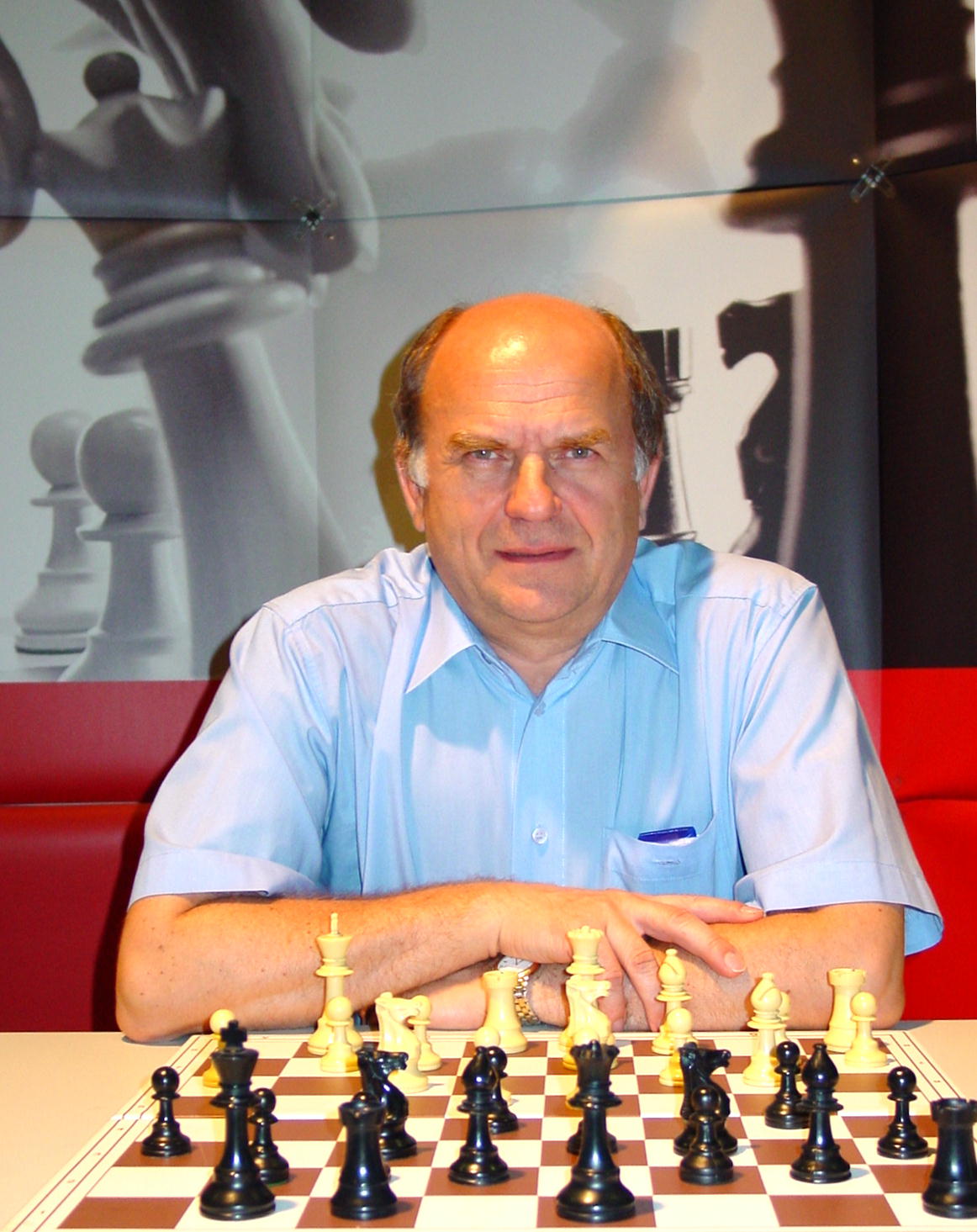
Kontynuacja odcinka 4
At the beginning of July 1941 Stalin ordered to have militia troops formed (‚narodnone opolčenije’). They were created in a number of places in the European part of the Soviet Union. As regards Leningrad, Stalin actually just approved the initiative of the boss of Leningrad communist organization, Andrej Ždanov. However, it was not his original thought. Everything started as a spontaneous movement initiated by the German attack and feelings of anger, patriotism and compactness that Hitler’s aggression aroused in Leningrad citizens. Later on people would enroll in the militia either under the influence of propaganda or since they were forced to register. Militia members were qualified craftsmen, engineers, teachers or students, simply said city inhabitants educated in technical fields or liberal arts. The first three divisions of Leningrad militia were formed by the mid-July 1941 and four guards divisions during four following weeks. Commanders called them guards divisions in order to disguise their insufficient training and shabby armament. Their members came from various Leningrad factories and also from the university and the Technical Institute. They gathered in provisional barracks where they were to undergo military training. However, there was hardly anyone to train them – one instructor per 500-600 militia members. Militia divisions did not lack only experienced officers and non-commissioned officers, they lacked everything. They did not even obtain enough weapons and ammunition. Every fourth member lacked a gun while many allocated guns originated from the Russian-Japanese war (from 1904-1905). Not even mentioning heavy weapons.
Most militia members had no idea what they could expect and what purpose they would be used for. Most of them were convinced that they would serve at various rearward and support units. Instead of that Soviet commanders sent them directly to the first line attempting to fill up gaps resulting from the destruction of ordinary divisions of the Red Army. The committment of militia at the battle front is considered another national tragedy by contemporary Russian historians. Men with poor armament and insufficient military training had not chance to succeed in the fight against Wehrmacht troops. Commanders sent militia against German armoured troops in senseless attacks in the style of living waves for the sake of having an excuse rather than due to a reasonable strategy. The only profit that the Soviet commandment gained from such massacres was a bit of time that Germans spent to liquidate the militia troops.
Viktor’s father was lucky at the beginning. He did die in a similar senseless counter-attack. After more than half of the committed divisions was destroyed, the commandment decided to dissolve them on 19th September 1941. The remaining men were transferred to regular Red Army units. Lev Merkurjevitch Korchnoi was a member of the Communist party and also a top specialist in cooling industry. Moreover, he was originally not conscripted into the Red Army due to his small figure. In spite of that he was enlisted in the militia infantry, so little respect the regime had for its human resources! He was summoned up in August 1941, too late to be ground up by the bloody mill in which seven militia divisions disappeared at the front line. Lev Mekurjevitch went through a few months of officer training and as a second lieutenant he was transferred to the 56th reserve shooting regiment.
According to his memoirs, Viktor last saw his father at the beginning of November 1941. His father, all swollen due to undernutrition (militia troops, like civilians, got even less food than the regular army) left the barracks to visit his home before leaving for the battle front. He died during one of the first battles at the coast of Lake Ladoga. From the beginning of September Germans held approximately 30 km of the coast along the southern bay of the lake from Schlisselburg towards Kobona. Militia troops attempted to support the Red Army in their desperate and long unsuccessful effort to push the Nazi away from this area. Later on it was discovered that the boat transporting Korchnoi’s troop on Lake Ladoga was hit by a German bomber. The boat went to the bottom and the crew disappeared. Red Army authorities cynically declared Lev Korchnoi missing. That was common. Those who wanted to die a heroic death in the Red Army had to leave a legend or a story behind and to have a witness. Everyone else was thrown in one bag with the missing, deserters, prisoners of war and defectors. Families of soldiers who disappeared in such a way did not get any financial support from the government. Their children were bullied by their mates. Viktor ended up in exactly the same situation. However, during the following months he went through even more cruel physical and mental suffering. The Siege of Leningrad was about to start.
Viktor encountered the war, which swept away his father as soon as it started, during the first days of July of the horrible year 1941. An army hospital was established in his 203rd municipal school and pupils, including Viktor, went there to help treat the injured or at least entertain them. Chess champions would also go there and play simultaneous games with injured soldiers. Ten-year-old Viktor was not good enough in chess yet to be able to play with adults. He simply recited poems to soldiers. Love of poetry was as strong in this young boy as his love of chess.
In the meantime the town was putting on military clothes. Viktor could watch the progress of preparations. Smolny Palace, the seat of the Leningrad communist party organization and the former centre of the Bolshevik revolution from November 1917 was all covered with camouflage nets. Gilded tips of Admirality were painted grey by mountain climbers. The Victorious column of Tsar Alexander I erected in the Palace Square to commemorate the triumph in Napoleonic wars was encircled with a wooden casing. Just an angel with a gilded cross stuck out. The famous Horse Tamers from the Anichkov Bridge were removed and buried in the garden of the Alexandrinka Theatre. Air raid shelters were built in public areas and parks. Soldiers tightened barrage balloons. “They floated under the blue sky like silver boats. One could not see their ropes and they seemed as if they loosely floated in the sky”. Even the symbol of the “Saint Peter’s town” – the sculpture of copper rider (Falceton’s equestrian statue of Peter the Great) was affected by the war. The sculpture was covered with soil and sand and this artificial barrow was topped with a special casing. Even in residential neighbourhoods people stuck paper tapes to windows so that glass would not pour out in case of an air raid. All of these were useful measures even though mortar firing and air raids by Luftwaffe started only in early September.
Viktor later recalled: “The first air raid took place on 8th September 1941. They put food warehouses, called Badajev warehouses, on fire. Lots of smoke was coming from there. It was obvious that Germans had informers in the city – the Soviet regime produced so many enemies that Germans knew everything and in the first place they bombed these warehouses. In general, Germans attempted to destroy all important buildings, in order to weaken the city defense. House no. 4 at the beginning of Litejny Prospect, a so called ‚Great House’, was the KGB building (at that time the headquarters and the main prison of the NKVD – note by Z.V.); Germans wanted to destroy it. However, the house was protected – there were anti-aircraft weapons on the roof and it was difficult to approach it. Bombs fell into its vicinity. Many houses were destroyed in the surroundings of our house (Litejny no. 16). One bomb of approximately two hundred kilograms landed on the pavement right in front of our house. The main load-bearing wall cracked. However, the bomb did not explode.” No wonder that Viktor’s grandma wanted to run away from the problematic neighbourhood of the strategically significant government building.
On the twenty first of August Viktor heard a speech by Andrei Zhdanov on the Leningrad radio. Zhdanov was the highest party representative in the town and a loyal servant of Stalin. He was trying to imitate his master by soldierly appearance – he would always wear a greenish-brown army blouse – and by unscrupulous brutality. “The enemy is trying to penetrate into Leningrad”, Zhdanov’s voice roared from the radio. “The enemy wants to destroy our households, take over factories and plants, to plunder the national heritage, flood streets and squares with blood of innocent victims, set peaceable citizens against each other, enslave free sons of our homeland”. A printed version of Zhdanov´s speech was displayed in Leningrad houses by Communist party members. One day before the speech was given on the radio, Wehrmacht destroyed a part of the main Moscow – Leningrad railway line by the town of Chudovo. Five days later Lyuban, situated 30 km north of Chudovo, surrendered. The main railway to Moscow became enemy’s spoils of war.
As soon as Germans reached suburbs of Leningrad and at the same time interrupted most traffic arteries connecting the city with the “Great Country”, the issue of transport of civil citizens to a safe place emerged. The Soviet general staff theoretically assumed that people from densely populated conglomerations would be evacuated should they end up in the line of war operations. As early as on 24th June 1941 a committee for evacuation of the Council of People´s Commissars of the USSR was established in Moscow. The committee was to organize evacuation from endangered territories. However, as typical of the Bolshevik regime people and their needs were not taken into consideration. Equipment was prioritized. It was followed by power representatives, i.e. party apparatus and NKVD units, then by technical staff and qualified workers. ‚Valueless’ groups of citizens were the last in the line. By the end of 1942 they managed to transfer to the East – mostly right behind the Ural or to Middle-Asian Soviet republics – approximately 12 million people. More than 65 million ordinary civilians were left behind in the war zone and occupied territories.
Transports were organized from Leningrad as well. All factories were dismantled and necessary specialists were sent along with them. The regime valued only those whom they could use for propaganda. Scholars and culture representatives could hardly ever use this way to save themselves. Most professors, musicians, writers and also chess players remained in the town if they did not join the army. Dmitri Shostakovich, the greatest Russian and maybe also world composer of the inter-war period, was enrolled in the firefighting brigade of the Leningrad conservatoire where he lectured. The famous photograph from the time of blockade showing Shostakovich wearing a firefighting mask while liquidating a fire which broke out after a German air raid was only made for the purpose of Stalinist propaganda. In fact, Shostakovich was transported by a special airplane to Kuibyshev where party and government authorities who were not vitally necessary in the endangered Moscow were relocated. During the first months of his Kuibyshev stay Shostakovich completed his famous 7th Symphony – ‚Leningrad Symphony’. However, Stalin´s propaganda claimed that the composer lived and worked in Moscow to persuade the public that the capital was safe to live in.
Zdeněk Vybíral
cdn