Jerzy Konikowski - wpisy autora

mar
19

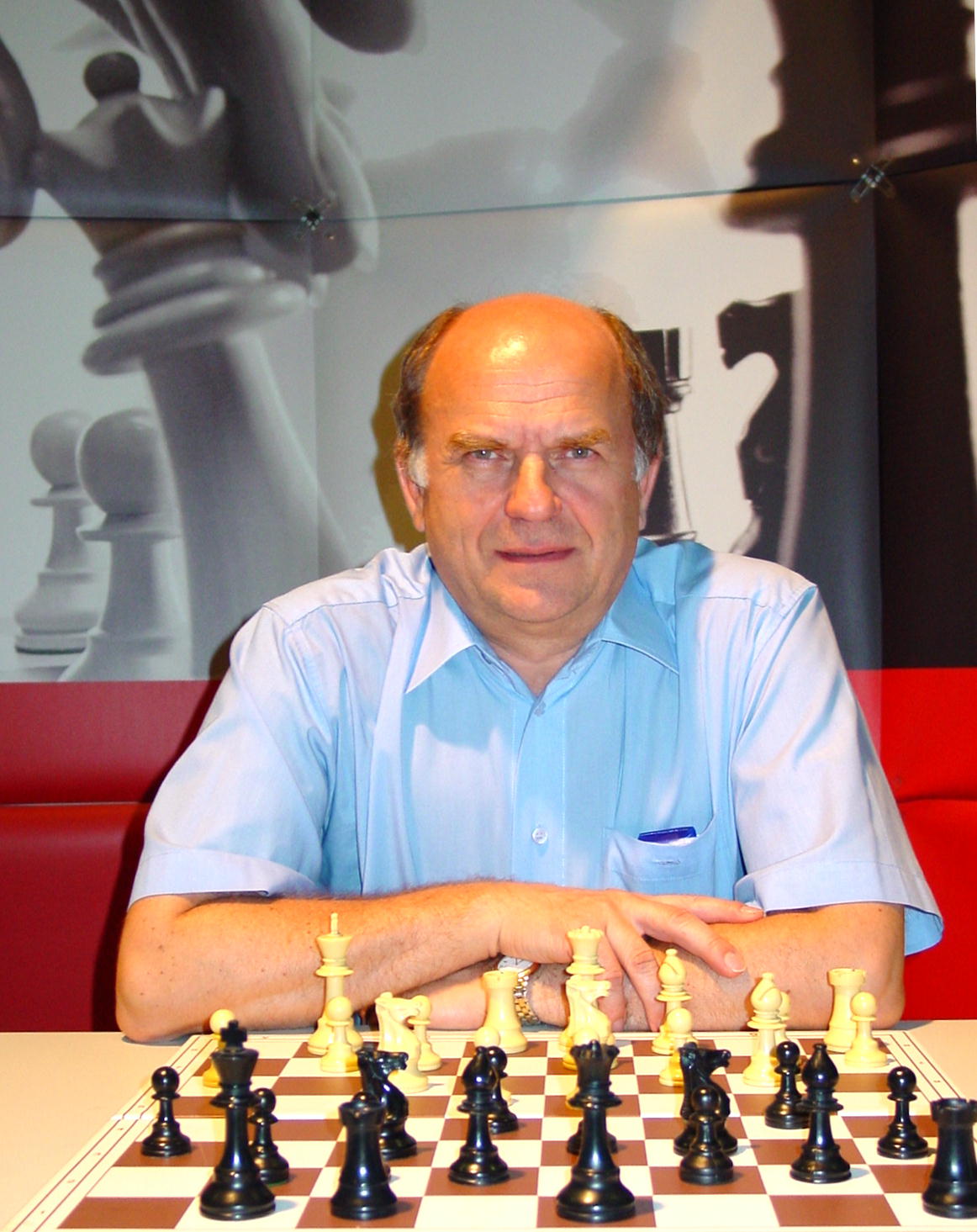
Left, Mr Dr Szabó László, the president, right IO Nagy Laszlo

There will be 4 GM-IM closed tournaments in a row in the near future in Budapest:

2022 year:

FIRST SATURDAY, org IO Nagy, www.firstsaturday.hu –
e-mail: firstsat@hu.inter.net whatsapp: +36-30-230-1914

17-26 March CZEBE,VEZÉRKÉPZŐ, Org IGM CZEBE, www.vezerkepzo.hu
e-mail: attila.czebe75@gmail.com, whatsapp: +36-30-715-2053

26 March-1 April CZEBE,

2-12 Apr FIRST SATURDAY,

15-23 Apr CZEBE,

26 Apr-5 May CZEBE,

7-17 May FIRST SATURDAY

18-24 May VEZÉRKÉPZŐ, Czebe (7 days 9 rounds GM-IM).Budapest

25 May – 3 June VEZÉRKÉPZŐ Czebe, 9 rounds Open Rigo memorial Balatonlelle,
150 km West from Budapest.

4-14 June, First Saturday

17-26 June CZEBE,

2-12 July, FIRST SATURDAY

14-23 July CZEBE

25 July – 4 August CZEBE

6-16 August FIRST SATURDAY.

18-27 Aug ARANYTÍZ GM-IM , org IO KORPICS, e-mail: clearlogicltd@gmail.com

3-13 Sept FIRST SATURDAY.

mar
16

Szokująco brzmi komunikat Międzynarodowej Federacji Szachowej, która postanowiła podjąć kroki względem rosyjskich i białoruskich zawodników. Zgodnie z wydanym komunikatem, zawodnicy z tych krajów do odwołania zostali zawieszeni w oficjalnych turniejach. W poszczególnych zmaganiach z cyklu mistrzostw świata szachiści będą mogli występować jednak pod flagą federacji.

Źródło

mar
16

Turniej poparcia dla walczącej Ukrainy. Zapisz się:
https://www.goldchess.com/en/other/gcchall18.html

Goldchess – sposób na wygrywanie

Szachy nie są idealne. Co robimy opowiem na przykładzie mistrzostw
świata. W wielu meczach szachiści z zespołu zarówno mistrza świata jaki i pretendenta szukali słabych punktów w grze przeciwnika, czego nie umie grać, czego nie lubi i jakie debiuty mu nie leżą, lub ich po prostu nie zna. I wykorzystywano to. Gra wtedy schodziła na tory mniej profesjonalne, właściwie przypadkowości, novum.

To samo robimy w Goldchess. Szukamy słabości w edukacji CEEC i wykorzystujemy to. Mamy tu lżej, bo możemy cofać ruchy i zmieniać kontynuacje, sposoby gry. Ale jak ktoś opanuje perfekcyjne nasz sposób i styl, to będzie go stosował bez poprawek, czyli z powodzeniem w turniejach i będzie trudny do ogrania.

Generalnie każdy gracz w turnieju lubi zagrać coś czego przeciwnik nie zna. A jeśli do tego dysponuje jeszcze umiejętnościami Goldchess, które preferuje i uczy ataków trudnych do dostrzeżenia i przewidzenia, sukces w turnieju w danej partii murowany. Bez względu na to jak silny przeciwnik siedzi przed nami.

I to jest właśnie Goldchess. Nowa era w szachach. Nowa dlatego, że
naszych kombinacji nie ma w liczącej 800 mln. partii ogólnej chesssbase. I zaskoczą nawet każdego arcymistrza.

Do nauki mamy naszą szkółkę, Training Box, oraz nasze turnieje.
Goldchess to zabawa, rozwijanie wyobraźni, nauka błyskotliwego stylu gry i… duże nagrody.

Zapraszamy www.goldchess.com
============================

Goldchess Assistant
„www.goldchess.com”

mar
15

W dniach 1-11 marca 2022 odbył się w St Louis tradycyjny turniej z udziałem mistrza Polski z 2019 roku Kamila Draguna.  

Końcowe wyniki przedstawia tabelka.

Źródło

Strona turnieju


mar
15

Kontynuacja odcinka 68

Dla czytelników książki

Mistrzowie Polski w szachach 1926-1978

mam pomyślną wiadomość: 2 część (lata 1979-2021 i 341 stron) jest już w drukarni.

Informacja na stronie wydawnictwa CAISSA: www.szachysklep.com.pl

lub https://www.szachysklep.com.pl/


mar
10

Sabotaging the Sicilian, French & Caro-Kann with 2.b3

leave a comment »

Sabotaging the Sicilian, French & Caro-Kann with 2.b3

By Jerzy Konikowski and Marek Soszynski

Russell Enterprises, 2018

ISBN: 9781941270837

One for flaneurs who like to meander.

If you play 1.e4 and are not averse to veering off into an infrequently frequented sideline when meeting various semi-open games, then this book may well be for you. It looks at lines involving the fianchetto of the queen’s bishop, an unusual sidestep in connection with 1.e4, but there we are.

We start with the Sicilian (1.e4 c5 2.b3), which is covered in section 1, chapters 1 to 8. There are 20 annotated games featuring , on the white side, the likes of Spassky, Kramnik, and Carlsen. This approach has a excellent pedigree, clearly, and on the evidence presented here tends to lead to interesting , complex middlegame positions. Let us say that Black tries to close down the long diagonal (a1-h8) with 2…Nc6 3Bb2 e5 (say). White can then seize the newly weakened diagonal (a2-g8) with 4.Bc4 or, alternately, try to prise the other diagonal open with 4.f4. Or indeed, he could pursue both goals. Tamaz Gelashvili, the Georgian grandmaster, is a great specialist in this line.

To the French now (1.e4 e6 2.b3), the focus of section 2, chapters 9-15, though with a mere five annotated games this time (a reduction of 75% I note). Pride of place here goes to the so-called Reti Gambit (1.e4 e6 2.b3 d5 3.Bb2 dxe4) although it is only a genuine gambit if Black defends the pawn with a pawn (4.Nc3 f5), a line known as the Gurevich Defence. Now 5.f3 Bd6! can lead to interesting complications. There is a fine attacking game by Luke McShane here which put me in mind of Carlsen’s game against Wojtaszek at Shamkir 2018. In both, you have an open Sicilian pawn structure (the moves d4 and …cxd4 have occurred) with White castled queenside, his king position fortified by the bishop on b2. A line that would be worth an occasional run out, I would say. Why not?

But the same cannot be said, alas, for  2.b3 against the Caro-Kann, which happens to be the subject of section 3, chapters  16-21. Here the analysis is accompanied by 5 annotated games and, despite one of these games being an exciting, epic encounter between Vasiukov and Bronstein, you would have to say that, realistically, the line only offers white equality. On 2…d5 3.Bb2 dxe4 4.Nc3 Nf6 5.Qe2 Bf5 (or maybe 5…Bg4) Black holds the pawn pretty easily and obtains a comfortable position. Yes, White can probably get it back if he goes 5.Ne2 (the plan being Ng3 and then Qe2) but I mean, really, is this how you want to be playing as White? White is just scampering to regain the pawn, not playing for an advantage, will obtain at best a position with few prospects. Not a good outcome for White.

As an afterthought (or postscript) the authors, Jerzy Konikowski and Marek Soszynski, look at the Scandinavian: 1.e4 d5 2.b3 (and not 2.exd5 Qxd5 3.b3? Qe5+ with disaster) dxe4 3.Nc3 Nf6 4.Qe2 when the best move is 4. …Nc6! and …Nd4 gives Black an advantage. My advice to white players: don’t do it!

So what is the verdict? Well, 2.b3 is a move that must be employed with judicious care; it is a bit of a slippery slope. To summarise briefly. 2.b3 is splendid versus the Sicilian ,whilst it can be frenetic (unduly forcing) against the French. It is mite concerning if not exactly crippling when essayed against the Caro-Kann. But the big no-no: it is as suicidal as an Ingmar Bergman character if played as a response to the Scandinavian. Desist!

The publisher’s description of the book is here.

mar
08

Kontynuacja odcinka 67

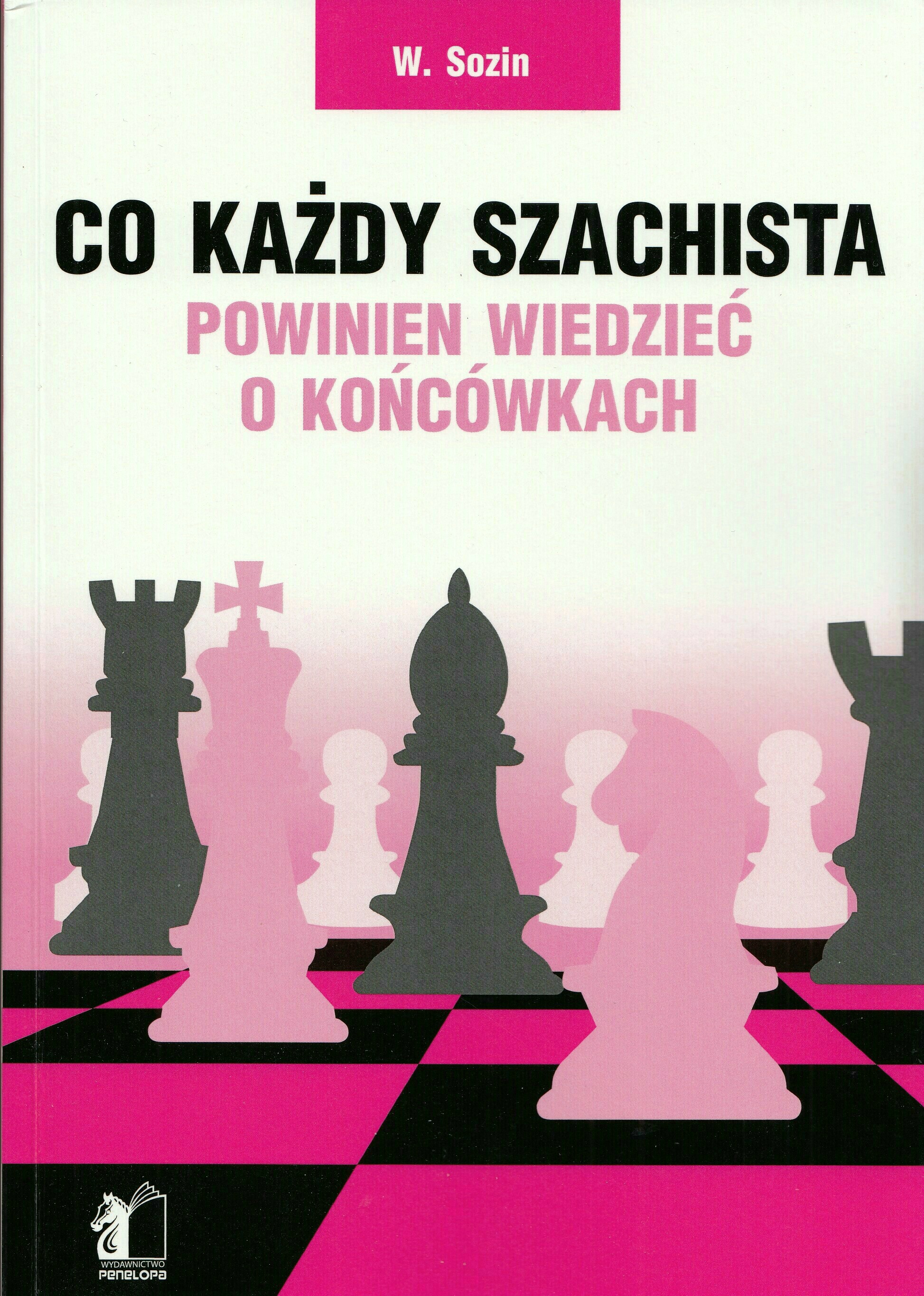
Niedawno ukazało się drugie wydanie  książki „Szybki kurs końcówek”.

Składa się z trzech rozdziałów:
1. Końcówki elementarne: mat samotnemu królowi
2. Podstawy końcówek pionkowych
3. 50 ćwiczeń w celu pogłebięnia zdobytch wiadomości.

Książkę można zamówić w wydawnictwie Penelopa.

mar
05

Więcej informacji na ChessBase News.

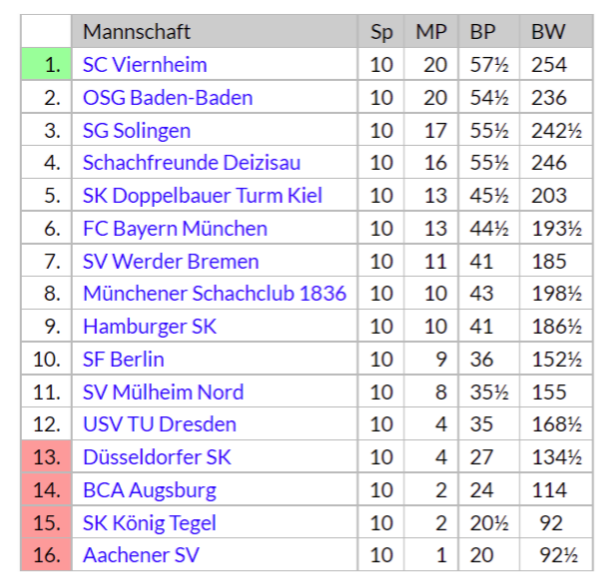
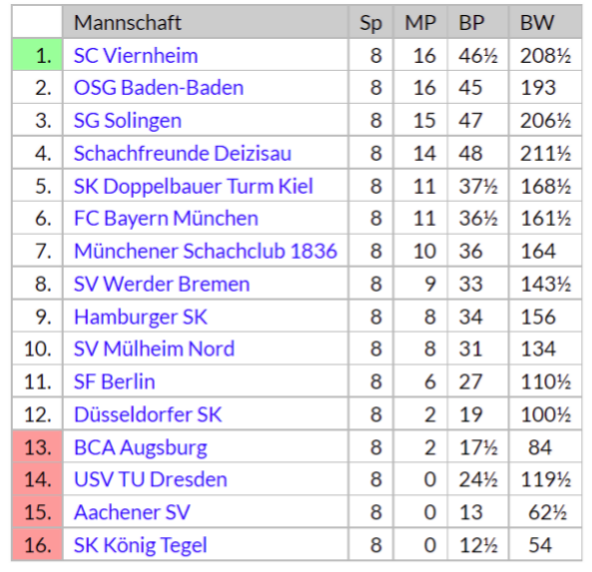
Dzisiaj rozpoczynają się rozgrywki I ligi niemieckiej z udziałem Polaków.

1. + 2. Rundy
Organizator: SC Viernheim
Sa 05.03.22 14:00 SC Viernheim BCA Augsburg
Sa 05.03.22 14:00 SG Solingen USV TU Dresden
So 06.03.22 10:00 BCA Augsburg SG Solingen
So 06.03.22 10:00 USV TU Dresden SC Viernheim
Organizator: FC Bayern München
Sa 05.03.22 14:00 FC Bayern München SF Berlin
Sa 05.03.22 14:00 Münchener Schachclub 1836 SK König Tegel
So 06.03.22 10:00 SF Berlin Münchener Schachclub 1836
So 06.03.22 10:00 SK König Tegel FC Bayern München
Organizator: SK Doppelbauer Turm Kiel
Sa 05.03.22 14:00 SK Doppelbauer Turm Kiel Aachener SV
Sa 05.03.22 14:00 Hamburger SK Düsseldorfer SK
So 06.03.22 10:00 Aachener SV Hamburger SK
So 06.03.22 10:00 Düsseldorfer SK SK Doppelbauer Turm Kiel
Organizator: SV Werder Bremen
Sa 05.03.22 14:00 SV Werder Bremen OSG Baden-Baden
Sa 05.03.22 14:00 SV Mülheim Nord Schachfreunde Deizisau
So 06.03.22 10:00 OSG Baden-Baden SV Mülheim Nord
So 06.03.22 10:00 Schachfreunde Deizisau SV Werder Bremen

Bundesliga-Seite…

Ergebnisseite des DSB…

mar
04

The Reti Opening: Properly Played

leave a comment »

The Reti Opening: Properly Played

By Jerzy Konikowski and Uwe Bekemann

Joachim Beyer Verlag, 2019

ISBN: 9783959209809

The right way to play the Reti.

This useful monograph surveys white’s principal lines of play following the moves 1.Nf3 d5. It is clear that white’s most convincing move here is 2.c4, but before moving on to that the authors cover both 2.g3 (in Chapter 1) and 2.b3 (Chapter 2). It is a bit dull, in truth, 2.g3, unless white plays a later c4. But 2.b3 can lead to lively positions.

After 2.c4, black can respond with 2…d4 (covered in Chapter 3), 2…e6 (Chapter 4) or 2…dxc4 (Chapter 5); however, the most common response nowadays is the Slav-like 2…c6.

Our options as white now are 3.b3 (dealt with in Chapter 6; and this move can lead, as when played on move two, to rich and lively positions), 3.e3 (examined in Chapter 7: an interesting approach that can give rise to strategically complex, Hedgehog like positions), and 3.g3 Nf6 4.Bg2, which is the main line.

On 4.Bg2, black has several possibilities, chief among them being 4…Bf5 (Chapter 8), 4…Bg4 (Chapter 9), 4…e6 (Chapter 10) and 4…g6 (Chapter 11). These four moves, while different in approach, are of about equal worth. If followed up correctly, they all should more or less equalise.

All told, I found the theoretical material (briefly summarised above) to be clearly presented and accompanied by a full, forensic analysis. Each chapter closes with some helpful concluding remarks.

In addition to the theory of the opening, there are 31 illustrative games in the final chapter, Chapter 12, including victories by Reti himself, as well as fine wins by world champions Carlsen, Kramnik, Botvinnik, and Capablanca. Most of these games are positional or strategic in nature, quite in keeping with the spirit of the Reti, but there are a few wild and wonderful creatures as well. Of these, I would point you toward Capablanca-Bogoljubov, Moscow 1925 (game 17) and Ivanchuk-Alekseyev, Jermuk 2009 (game 3) as radiant exemplars. In general, the annotations are along the lines of strategic explanations of the play, and they are very lucid at that, but when needed there is heavy duty analysis, intricate in detail.

From the assembled theoretical material, white can eke out a fair number of lines of play. For example, white could employ the line 1.Nf3 d5 2.b3; or 2.c4 c6 3.e3; or the main line 3.g3 Nf6 4.Bg2. But note that moves other than 1…d5 are not covered in this book. So if you intend to play 1.Nf3 and want to know how to meet 1…c5, 1…Nf6 (maybe angling for the King’s Indian Defence), or 1…f5, you need to look elsewhere. If you are in this quandary, I would recommend Nigel Davies’s The Dynamic Reti. Although somewhat dated (it first came out in 2004), it is an excellent repertoire book and even today his recommendations hold up well. It is helpful, in this connection, that there are few critical lines in the Reti, situations where white is called upon to burn his bridges.

Now for a few concluding remarks of my own. There is no clearly best approach by white in the Reti, it would seem, since black can equalise with accurate play against virtually anything that is thrown at him. Though, having said that, the path to equality will sometimes narrow slightly. So white should aim to sculpture a middlegame that will give rise to complicated strategic play. The comprehensive treatment of the opening in The Reti Opening: Properly Played, where it is properly presented and analysed, will furnish the reader with the tools to do just that.

The publisher’s description of The Reti Opening: Properly Played is here.

  • Szukaj:
  • Nadchodzące wydarzenia

    maj
    1
    pt.
    2026
    całodniowy TePe Sigeman Tournamnt
    TePe Sigeman Tournamnt
    maj 1 – maj 7 całodniowy
    Miejsce turnieju: Malmö Strona turnieju: Tournament Info 2026 – Tepe Sigeman & Co Chess Tournament Grają m.in. Carlsen, Abdusattorov, Erigaisi, Van Foreest itd.
    maj
    4
    pon.
    2026
    całodniowy GCT Poland (rapid)
    GCT Poland (rapid)
    maj 4 – maj 6 całodniowy
    Strona turnieju: Home – Grand Chess Tour Grają m.in. Praggnanandhaa, Keymer, Sindarov, Firouzja, So, Caruana, Giri, Aronian, Vachier-Lagrave  
    maj
    7
    czw.
    2026
    całodniowy GCT Poland (blitz) 2026
    GCT Poland (blitz) 2026
    maj 7 – maj 8 całodniowy
    Strona turnieju: Home – Grand Chess Tour  
    maj
    24
    niedz.
    2026
    całodniowy IMEK Batumi
    IMEK Batumi
    maj 24 – cze 6 całodniowy
    W dniach 24.05-06.06.2026 w Batumi (Gruzja) odbędą się Indywidualne Mistrzostwa Europy Kobiet. strona zawodów komunikat
  • Zwiastun

  • Odnośniki

  • Skąd przychodzą

    Free counters! Licznik działa od 29.02.2012
  • Ranking FIDE na żywo

  • Codzienne zadania

    Play Computer
  • Zaprenumeruj ten blog

    Wprowadź swój adres email, by prenumerować ten blog i mieć informację o nowych wpisach przez email.