

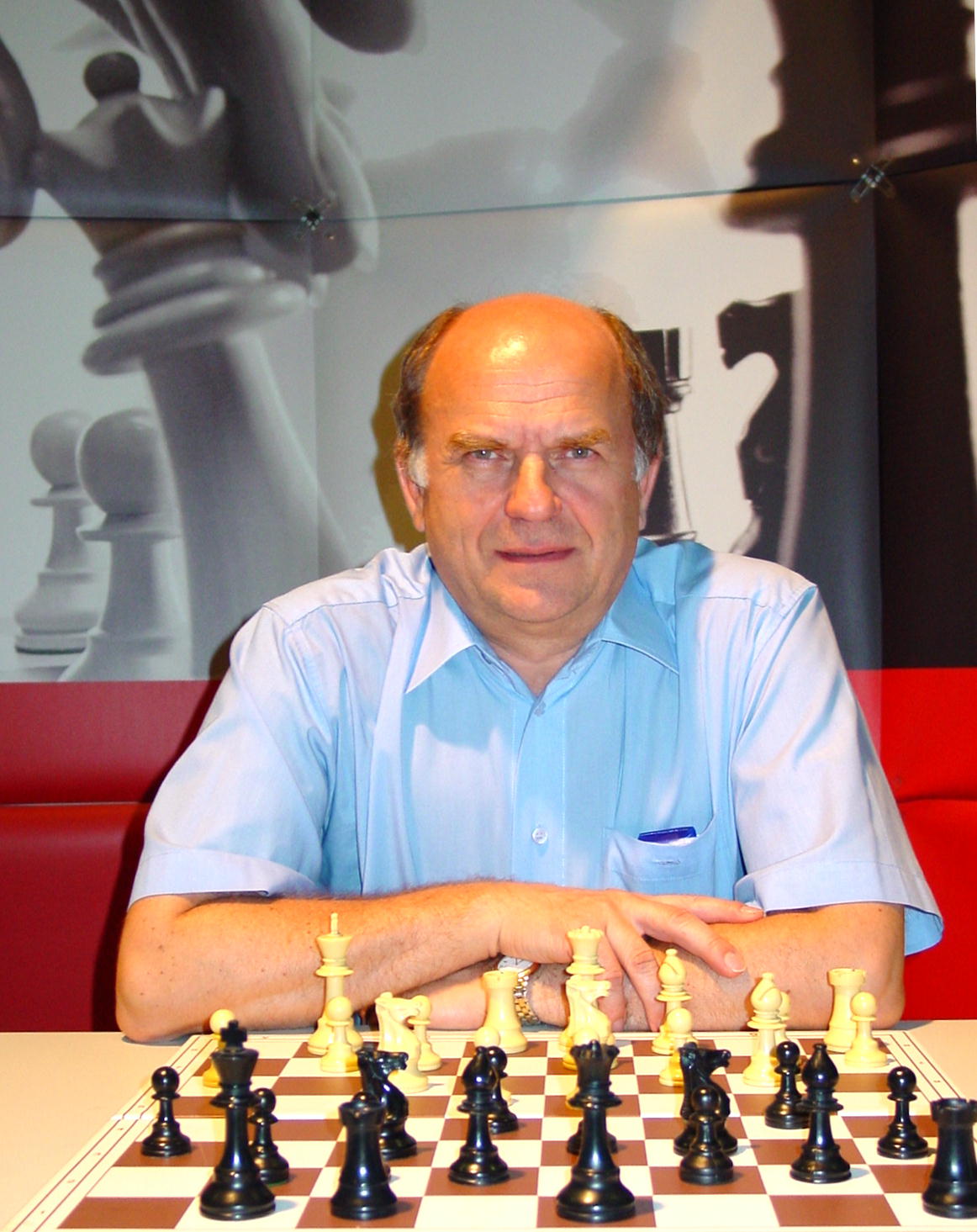
Jerzy Konikowski - wpisy autora

lut
19

W ostatnim czasie otrzymałem kilka emailów z zapytaniem, jak właściwie należy uczyć szachów początkujących adeptów królewskiej gry. Jest tyle teorii w tej kwestii, że właściwie trudno jest się w tym połapać. Sami trenerzy stosują różnorodne metody szkoleniowe i nie wiadomo, które są prawidłowe. Jak traktować pewne wskazania, które są często różnie interpretowane przez szkoleniowców, publicystów itd.

Zacznę od moim pewnych prywatnych „badań” na przestrzeni wielu lat wśród studentów, pracowników naukowych oraz personelu technicznego uniwersytetu w Dortmundzie. Zadawałem wszystkim dwa proste pytania:

1. Jaka twoim (pana) zdaniem jest najważniejsza faza partii szachowej: początek, środek czy końcówka? Wszyscy bez wahania odpowiadali: „Początek”. Na dodatkowe pytanie: dlaczego? „To jest przecież logiczne, jeśli początek będzie pomyślny, to inne części partii będą łatwiejsze do gry”.

2. To w takim razie od czego powinno rozpocząć się naukę szachów, oczywiście zakładając że znamy już poszczególne ruchy. Odpowiedź: „Od początkowych posunięć, bo to jest najważniejsze. Jak można grać w szachy nie wiedząc, w jaki sposób trzeba zaczynać?”

Podobne pytanie zadawałem graczom klubowym niższych klas. Tutaj odpowiedzi były różne. Ale najczęściej dominowała znana teza: końcówki, ponieważ tak zalecali wielcy mistrzowie przeszłości, np. Capablanca.

Mamy tutaj do czynienia z pewnym fenomenem. Zawodnicy klubowi, którzy mieli już kiedykolwiek do czynienia z trenerami są „zakażeni” pewną ideologią, która nie zawiera w sobie zdrowej logiki. Jest ona oparta o pewne wzorce z przeszłości. Głosili je wprawdzie najsilniejsi szachiści świata, ale to było około 100 lat temu. Oni nie byli szkoleniowcami z prawdziwego zdarzenia, opierali swoje dogmaty na bazie własnych doświadczeń i ówczesnej rzeczywistości.

Wtedy szachy były grą elitarną. Było mało szachistów i imprez szachowych. Trening mógł być prowadzony więc przez wiele lat. Teoria debiutów była dopiero w zalążkach. W turniejach szachowych startowali dojrzali wiekowo zawodnicy.

Obecnie szachy są sportem masowym i wiek nie odgrywa żadnej roli. W turniejach grają nawet dzieci. Każdy chce możliwie szybko odnosić sukcesy i to jest motywacją do dalszej pracy i zajmowania się szachami. Jednakże trudno jest to szybko osiągnąć, jeśli trening jest przeprowadzony w niewłaściwym kierunku.

Na mojej stronie w wspomnieniach opisałem moje własne podejście do szkolenia szachowego. Tylko dzięki temu, że nie uległem powszechnie rozpowszechnianym kanonom, udało mi się szybko dojść do ścisłej czołówki Pomorza w kategorii seniorów. Póżniej nadrabiałem systematycznie wiedzę z gry środkowej i końcowej. Takie podejście do szachów uważam za prawidłową drogę i tak też polecałem moim podopiecznym.

Może ktoś w tym momencie zadać pytanie: „Jeśli uważa pan taki sposób szkolenia za prawidłowy, to dlaczego nie osiągnął pan wielkich wyników sportowych”?

Życie zawodowego szachisty jednak mnie nie odpowiadało i dlatego dość wcześnie zająłem się działalnością szkoleniową. Ale jako zawodnik miałem też pewne sukcesy turniejowe. Przede wszystkim w grze błyskawicznej przez wiele lat zaliczałem się do ścisłej czołówki krajowej. Na polskiej liście rankingowej FIDE w 1981 roku znalazłem się na 10 miejscu z 2400 pkt. Otrzymałem wtedy klasę mistrzowską upoważniającą mnie do pobierania stypendium sportowego w wysokości 8000 zł.

O moich pierwszych doświadczeniach trenerskich pisałem na blogu w kategorii „W roli trenera”

Ten przypadek pogłębił jeszcze bardziej moje przekonanie, że pracę szkoleniową trzeba zaczynać od stadium początkowego, czyli debiutów.

Tak pracowałem z juniorami w punkcie szkoleniowym w Częstochowie. O osiągnięciach moich podopiecznych pisałem na stronie. Potem pracowałem jako trener około 25 lat w Niemczech, mi.in. z kadrą młodzieżową w Essen. Z tej grupy wyrosło dwóch olimpijczyków (GM Lutz i MM Heinbuch), trenowałem wicemistrzynię Niemiec kobiet Reginę Gadau, potem był roczny trening z Naiditschem, 4-letnie szkolenie internetowe  Wojtaszka. Byłem kilka lat trenerem kadry niemieckiej głuchoniemych itd. W mojej pracy trenerskiej kładłem główny nacisk na dobrze dobrane otwarcia i były sukcesy! Przypominam, że byłem tylko trzy lata trenerem zawodowym (1978-1981). W innym okresie była to praca hobbystyczna!

W Polsce jako trener miałem też swoje osiągnięcia. W 1979 roku Główny Komitet Kultury Fizycznej i Sportu opublikował listę trenerów i instruktorów szachowych:

1. J.Konikowski 719 pkt.
2. W.Schinzel 665 pkt.
3. H.Śliwiński 657 pkt.
4. S.Witkowski 623 pkt.

Na dalszych miejsca znależli się: 8. W. Schmidt, 24. A.Sydor, 27. R.Grąbczewski, 28. J.Kostro, 34. W.Balcerowski itd.

Na  podobnej liście z 1981 roku stan czołówki był następujący:

1. J.Konikowski 1313 pkt.
2. K.Sikora 635 pkt.
3. W.Schinzel 593 pkt.
4. R.Drozd 475 pkt.
5. W.Jagodziński 472 pkt.
6. T.Tomalczyk 400 pkt.

Dwukrotnie w latach 1979 i 1980 byłem w piątce najlepszych trenerów w częstochowskim sporcie.

Miałem więc spore sukcesy jako szkoleniowiec i swoje doświadczenia oraz wiedzę przekazuję dalej –  w różnej formie – polskim szachistom. Mimo tego niektóre osoby w kraju próbują zdyskredytować moje zaangażowanie na tym polu i także moje osiągnięcia trenerskie!

lut
19

polanski2

Roman Polański grający w szachy w Saint Tropez, Francja 1979

 pol

 Roman Polański i Jerzy Jeszke „grający” na scenie, Niemcy 2003

Szachy to także sztuka. Artyzm. To konsekwencja, precyzja, upór i cierpliwość. Talent oszlifowany przez mistrzów i podparty ciężką pracą. Aby uzyskać sukcesy na miarę światową trzeba się poświecić bez reszty. Sukces tworzą ludzie inteligentni, którzy znają odpowiedzi na pytania, jak? Z kim, i po co?

„Miarą sukcesu jest ilość wrogów. Sukces jednych wzbudza niechęć i zazdrość innych.” – Roman Polański.

Roman Polański od 15 lat współpracuje z polskim aktorem – Jerzym Jeszke, który osiągnął największy międzynarodowy sukces w historii polskiego teatru i mimo tego nie ma ogólnego uznania w kraju.

Jego managerem jest Andrzej Niklas, który współpracuje także ze mną w redagowaniu tego bloga.

Warto dodać, że wszyscy trzej są szachistami amatorami, którzy na szachownicy cenią sztukę i prawdę.

Dla przypomnienia


lut
17

Viswanathan Anand

Dear chess friends,

Below you can find the official Round 10 Report on the GRENKE Chess Classic in Baden-Baden. Please feel free to use this report and the accompanying photos and videos on your own websites, but please link to the official website (http://www.grenkechessclassic.com) and credit Georgios Souleidis for the photos, Macauley Peterson for the videos and myself (Colin McGourty) for the text.

Thank you for all your coverage of the 2013 GRENKE Chess Classic!

Best wishes,

Colin McGourty

GRENKE Chess Classic press team

—-

Note: the full version of this report including diagrams will shortly appear on the official website

Round 10: Anand wins the GRENKE Chess Classic

The World Champion has won his first classical tournament in almost five years after an enthralling final day’s play in Baden-Baden. It started fast with Anand and Naiditsch blitzing out a rook ending that might have been drawn but ended in the German’s resignation on move 49. That left Caruana needing to beat Fridman to force a play-off, but he missed a gilt-edged chance in what fittingly became the longest game of the tournament.

Final rounds are sometimes dull, but there was every reason to hope for action at the GRENKE Chess Classic. No round had yet finished in three draws, and that was largely due to Arkadij Naiditsch’s seven decisive games in only nine rounds. He had the white pieces against Anand, and the players didn’t disappoint. Anand went for the Sicilian and followed the remarkable 1999 Kasparov vs. the World internet game, where „the world” played the Sicilian novelty 10…Qe6. Anand said he’d looked at the line and that particular game just before this tournament. Naiditsch deviated from Kasparov’s play with 14.Nc3, and after 14…Rxa8 15.Bg5 e6 16.Re1 he played 16…Nd5:

Anand: “Nd5 is a pretty ugly move to make, but I simply didn’t want to keep calculating with the queens on the board”. After 17.Nxd5 Qxd5 18.Qxd5 exd5 19.Rad1 h6 20.Bc1 d4 Black had doubled pawns, but they controlled the position, with the d4-pawn taking the c3- and e3-squares away from white rook and preventing the bishop dropping back to e3. Vishy thought his position was very good, but heaped condemnation on 24…a5?!, calling it a “terrible”, “horrible”, “embarrassing” and even “insane” move.

He preferred simply 24…Rc7. Although the move in the game is actually Houdini’s first choice it allowed Naiditsch to bail out into a rook ending with 25.b4! Rc2 26.bxa5 bxa5 27.Rxa5 Nd3 28.Ra7+ Kc6 29.Rxf7 Nxe1 30.Kxe1 Rxc1+ 31.Kd2 Rg1 32.Rxg7 Rxg2:

It seemed, at least from the speed with which Naiditsch was playing, that he had a draw worked out, but Anand thought his opponent, “really underestimated the position”, later commenting that “these rook endings are very, very tricky. You have to play them incredibly precisely”. Here Naiditsch quickly played 33. Ke1? and once again Anand didn’t mince his words, describing it as “a lemon” and “wrong on so many levels”. He thought his opponent had panicked about d3+ after the correct 33.Ke2!, but saw nothing to worry White in that line. In contrast to the game Naiditsch might have managed to queen his a-pawn.

33.Ke1? instead allowed Vishy to gain tempi for the pawn race by giving check – 33…Rxh2 34. Rxg6 Rh1+ 35. Kd2 – and he said he had the winning plan worked out around here. The moves continued to come at almost blitz pace until a shell-shocked Naiditsch resigned: 35…h5 36. Rh6 h4 37. a4 h3 38. a5 h2 39. a6 Kc7 40. Rh7+ Kb8 41. Ke2 d3+ 42. Kd2 Ka8 43. Rh5 Ka7 44. Rh6 d5 45. Rh8 Kxa6 46.Rh6+ Kb5 47. Rh8 Kc4 48. Rc8+ Kd4 49. Rh8 Ke4 0-1

Afterwards Anand reflected on his improved form this year, remarking that his last reasonably successful tournament before 2013 was Wijk aan Zee 2011, where he finished clear second behind Nakamura on +4. “After that basically I went over a cliff and the next five tournaments were pretty awful”. Wijk aan Zee this year also went well until the last round, with the champion commenting, “I was hoping I wouldn’t do a Wang Hao today!”

Anand added later in the press centre: “After Bilbao 2011 my big problem was getting interesting positions where I had chances. This year the new problem has been exploiting those chances – against Fridman here, Hou Yifan in Wijk aan Zee or last year against Nakamura and Adams at the London Chess Classic I’ve been gifting people half points. If it wasn’t for that my results would be much better. Still, it’s a hundred times better to have the second problem! I need to work on my technique.”

The second game of the day to finish was Adams-Meier. The players came into the final round level and with mathematical chances of winning the GRENKE Chess Classic, but they ended up playing a somewhat disjointed game. Meier’s openings have been impressive here in Baden-Baden, and although Adams noted “it’s not easy to play creatively in the final round” he tried to sidestep any preparation with 1.e4 e6 2.d3!?. Instead Meier relished the chance to sharpen play, with Adams summing things up: “I just wanted to get a kind of position where we both needed to think, but it didn’t really work as I was the only one thinking!”

After a confusing middlegame where Adams chose 13.Ne4?! instead of the natural 13.Nd5! and Meier then spent 40 minutes convincing himself not to play the obvious 13…Bf5!? the crisis came on move 19, when Adams blundered an exchange with 19.Nd2? His pieces apparently had plenty of room, and he half-joked afterwards, “how could my rooks possibly get trapped?”

Georg Meier was so happy that his opponent had blundered that he overlooked he could play 19…Nc2! and only then 20…Bd3. Instead his 19…Bd3?! allowed 20.Be4!, which discouraged his opponent to the extent that Meier didn’t take the exchange and played 20…Bxe4, after which the game soon fizzled out to a draw. Meier explained his thought processes: “I thought Mickey blundered and instead of winning I blundered straight back. I realised immediately what I’d just done so I tried to be solid.”

Adams described today’s game as his worst of the tournament, but ultimately didn’t feel he’d played badly in Baden-Baden: “I had very few opportunities when I had the advantage. When you play good players and they play well it’s not easy to win.” Meier joked that the spectators probably thought a new player had entered the tournament for the second half, in which he said he could have scored 4.5/5. He noted he’d perhaps made three mistakes in five games in the latter stages, while he was averaging 10 a game at the beginning.

That left only Fridman-Caruana, which kept the audience on tenterhooks for over seven hours. Fridman played the Exchange Slav, which doesn’t have the most combative of reputations, even if Jan Gustafsson in the commentary box noted that its “street cred” has improved since Alexander Morozevich and Vladimir Kramnik adopted the “weapon”, with the latter using it to beat Levon Aronian in one of the games of the 2012 Olympiad. On this occasion, however, the opening lived up to its reputation, with Fridman nursing a small edge deep into the middlegame. It was only in the run-up to the time control that the ice began to shift. Caruana now knew he needed a win, and his 32…Bg5 provoked his opponent into pushing his pawn to h4. Under normal circumstances that would have changed little, but Fridman was coming off a run of three losses in four games, and short of time he overlooked a simple pawn-winning tactic:

36.Bxd6? Qxd6+ 37.f4 Bxh4 An ending soon arose where Black was the clear favourite, but with both players exhausted and a play-off place up for grabs anything could still happen. Fridman had had a disappointing tournament overall, but he at least managed to demonstrate some endgame wizardry at the close with 54.f5+!.

After 54…exf5 (54…Kf7!? was another try) 55.Ne2 Kf7 56.Nf4 g5 57.Nxd5 Ke6 58.Nc7+ Kf7 59.Nd5 Bb4 60.Nxb6 pawns were suddenly level, although the Italian still had chances of disturbing Vishy Anand’s evening. The final chance came after 65.Ke2.

The 65…f4! break (or 65…g2 and then 66…f4) would have allowed the black king to rush towards the white pawns on b3 and a4. Caruana still had almost twenty minutes to think at this point, but his slow 65…Ke4? allowed 66.d5!. He still had a long time to contemplate the ruins of his position, but there was no longer any way to avoid an inevitable draw.

Caruana cut a disconsolate figure after the game, but retained his objectivity. Although his result couldn’t be called bad – he actually gained rating points – he was unhappy with his overall play and felt that his form had finally come back to haunt him in the last two games.

So World Champion Viswanathan Anand remained undefeated and took clear first place at the 2013 GRENKE Chess Classic.

Final standings:

1. Anand: 6.5
2. Caruana: 6
3. Meier: 5 (2 wins)
4. Adams: 5 (1 win)
5. Naiditsch: 4
6. Fridman: 3.5

Report: Colin McGourty  Photos: Georgios Souleidis Videos: Macauley Peterson

——————————————————

NOTE ON VIDEOS:

You’re encouraged to embed Macauley Peterson’s livestream video of the post-game interviews on your websites. Simply copy and paste the following code: (the videos can also be found at: http://grenkechessclassic.com/en/videos-en/10th-round )

Anand post-game:

<iframe src=”http://new.livestream.com/accounts/2700783/events/1873493/videos/11903914/player?autoPlay=false&height=360&mute=false&width=640” width=”640″ height=”360″ frameborder=”0″ scrolling=”no”></iframe>

Adams and Meier:

<iframe src=”http://new.livestream.com/accounts/2700783/events/1873493/videos/11904449/player?autoPlay=false&height=360&mute=false&width=640” width=”640″ height=”360″ frameborder=”0″ scrolling=”no”></iframe>

Round 10:

<iframe src=”http://new.livestream.com/accounts/2700783/events/1873493/videos/11898550/player?autoPlay=false&height=360&mute=false&width=640” width=”640″ height=”360″ frameborder=”0″ scrolling=”no”></iframe>


lut
17

Po osiedleniu się w 1981 roku w Dortmundzie wziąłem udział w kilku turniejach, które wygrałem. Zostałem też mistrzem miasta i okręgu. Byłem też liderem klubu, który był współorganizatorem znanego festiwalu. Dzięki swojej pozycji mogłem wpłynąć na organizatorów, aby zapraszali szachistki i szachistów z Polski. W Dortmundzie grali m.in. Hanna Ereńska-Radzewska (obecnie Barlo), Agnieszka Brustman, Małgorzata Wiese, Włodzimierz Schmidt, Aleksander Sznapik, Andrzej Filipowicz, Jacek Gdański, Roman Tomaszewski itd.

W 1988 roku odbyły się dwa turnieje arcymistrzowskie: A (kategoria 12) i B (kategoria 7). Wcześniej organizatorzy proponowali mnie dwa razy uczestnictwo w głównym turnieju. Mój wysoki, jak na tamte czasy ranking 2400, dawał takie możliwości. Odmawiałem, gdyż słusznie nie czułem się na siłach startować w tak silnych imprezach. Nigdy nie byłem zawodowym szachistą i grę w turniejach traktowałem zawsze hobbystycznie. Wolałem grać w Dortmundzie w openach lub w grupie mistrzowskiej.

W 1988 roku zdecydowałem się na grę w turnieju B, w którym wziął też udział wielokrotny mistrz Polski i olimpijczyk arcymistrz Włodzimierz Schmidt. W 8 rundzie doszło do naszego spotkania przy szachownicy. Ciekawa sytuacja była przed partią. Włodek ze swoim niemieckim nazwiskiem grał pod polską flagą, natomiast ja z polskim pod niemiecką. W pewnym momencie podszedł do mnie dyrektor turnieju Jürgen Grastat z prośbą, abyśmy punktualnie rozpoczęli partię, ponieważ jeden z fotografów znanego niemieckiego pisma chce zrobić nam – z uwagi na kuriozalną sytuację – zdjęcie. Tak też się stało i fotografia ukazała się potem w tym piśmie z odpowiednim komentarzem.

Kilka słów o samej partii. Zdawałem sobie sprawę, że moje szanse z zawodowcem są znikome. Postanowiłem więc grać oryginalnie, aby zmusić Włodka do większego wysiłku w debiucie. Udało się! Schmidt poświęcił wiele czasu na fazę debiutową. Uzyskał znacznie lepszą pozycję, ale nie starczyło czasu na wykończenie dzieła. W 36 posunięciu mój partner przekroczył czas do namysłu.

Ostatecznie Włodek zajął w turnieju 6 miejsce z 5.5 punktami, natomiast ja 9 lokatę z 4 pkt. Nie byłem ostatni (konkurowało 12 zawodników) i to uznałem za sukces.


lut
17

Petrov[1]

W dniach 15-17 lutego 2013 r. w Jurmale (Łotwa) odbył się Memoriał Władimira Pietrowa z udziałem Polaków: Radosława Wojtaszka, Michała Krasenkowa i Kamila Draguna.

Turniej rozgrywany był na dystansie 14 rund z tempem 15 minut na partię + 6 sekund za każdy ruch.

Piękny sukces odniósł nasz arcymistrz Radosław Wojtaszek, który został ostatecznie sklasyfikowany na pierwszym miejscu.

Wynik czołówki po 14 rundach

M-sce Nazwisko i imię Kraj Rg  Pkt  TB 1  TB 2  TB 3
1 GM Wojtaszek Radosław POL (2710) – 10.5 – 108.5 126.0 2795
2 GM Malakhov Vladimir RUS (2730) – 10.5 – 107.0 124.5 2765
3 GM Ivanchuk Vassily UKR (2714) – 10.0 – 110.5 127.0 2729
4 GM Sandipan Chanda IND (2590) – 10.0 – 103.5 120.0 2678
5 GM Ehlvest Jaan USA (2541) – 9.5   – 107.0 121.0 2719
6 GM Zhigalko Sergei BLR (2656) – 9.5   – 106.5 123.0 2726
7 GM Fier Alexandr BRA (2601) – 9.5   – 102.5 119.5 2694
8 GM Grachev Boris RUS (2691) – 9.5   – 99.0 115.0 2671
9 GM Alekseev Evgeny RUS (2672) – 9.5   – 97.0 113.0 2616
10 GM Shirov Alexei LAT (2728) – 9.0   – 105.5 123.0 2669
11 GM Kovalenko Igor UKR (2635) – 9.0   – 105.5 123.0 2657
12 GM Kulaots Kaido EST (2575) – 9.0   – 102.0 118.5 2602
13 GM Gleizerov Evgeny RUS (2570) – 9.0   – 102.0 118.0 2681
14 GM Krasenkow Michał POL (2642) – 9.0   – 100.0 115.5 2621

Junior Kamil Dragun zajął 28 lokatę z 8 punktami.

Strona turnieju 

Transmisja

Wyniki

ChessBase News

Partie  Pietrowa


lut
17

Caruana-Adams

Meier-Naiditsch

Anand-Fridman

Dear chess friends,

Below you can find the official Round 9 Report on the GRENKE Chess Classic in Baden-Baden. Please feel free to use this report and the accompanying photos and videos on your own websites, but please link to the official website (http://www.grenkechessclassic.com) and credit Georgios Souleidis for the photos, Macauley Peterson for the videos and myself (Colin McGourty) for the text.

If you’d prefer not to receive press releases from the GRENKE Chess Classic please reply to this mail with „UNSUBSCRIBE” as the subject.

Best wishes,

Colin McGourty

GRENKE Chess Classic press team

—-

Note: the full version of this report including diagrams will shortly appear on the official website

Round 9: Anand catches Caruana

The script of the GRENKE Chess Classic had seemed to be carved in stone – a single decisive game a day, the World Champion struggling to win and Caruana surviving scares on his way to an inevitable first place – but in the penultimate round the script was tossed out of the window. Caruana fell to defeat against Adams, Anand joined him in the lead by beating Fridman, and Naiditsch was tamed by Meier.

The tiger from Madras has at times exhibited the frustration of a caged animal here in Baden-Baden, but he remains unbeaten and today chose the perfect moment to pounce. Although Anand was giving little away in the press conference, his victory over Daniel Fridman was obviously cooked up in his home laboratory.

Fridman had out-prepared Fabiano Caruana in the fashionable 5.Nc3 line of the Petroff in Round 5, but this time it was Anand who sprang a surprise in the classical main line. 20.Ra2 was a deviation on a 2009 game between Vladimir Akopian and one of Anand’s current seconds, Rustam Kasimdzhanov (who back then was seconded by Fridman himself!). After 20…b6 21.Rae2 Fridman took the bait, noting that capturing the pawn was the point of his 20…b6, so it was a little late to turn back now.

21…Bxa3!? Vishy’s venomous response was 22.Bg4!! which Fridman said he’d “blundered”, although GM Jan Gustafsson on the live commentary said such a quiet move was far from an obvious follow-up to the pawn sacrifice. The natural 22…Bxg4? loses instantly to 23.Nf6+! Houdini recommends the madness of 22…Be6! 23.Bxh6! Bxg4 24.Nf6+!… and at least initially claims a draw. Fridman’s 22…Rf8 was a decent human response, but after 23.Bxf5 Qxf5 24.Bxc7 Anand had re-established material equality while retaining an attack on Black’s uncoordinated forces. It was only after 24…Rd7 25.Be5 f6 26.Ng3 Qe6 27.Qa4, however, that the outcome of the game was determined.

27…fxe5! would have left Black only a pawn down, but Fridman’s 27…Nc4? ran into 28.Bd6! (he was only expecting 28.Bxf6). If 28…Qxd6 29.Qxc4+ Kh7 Black’s problem is that 30.Ra2 (and countless other moves) win the homeless a3-bishop – yet another reason to regret taking the poisoned pawn! In the game after 28…b5 Black was simply an exchange down, and things could have ended very quickly.

Fridman turned interviewer in the post-game press conference: “My main question about the game is why didn’t you just play 33.Rxb6! axb6 34. Ne2! and resigns?” Anand had a good rejoinder – “I never know what’s going to make my opponents resign,” but then admitted he’d simply missed that trick to trap the bishop. It made precious little difference. Anand played 33.Ra6, saying his plan was just “to sit there and hold it tight,” and he did, with Fridman eventually resigning on move 47.

Georg Meier probably wants this tournament to go on and on as his play, and especially his preparation, is improving by the round. He said Naiditsch had wanted to surprise him, but he was ready with the novelty 11.b3 (improving on a game Le Quang Liem had won after playing 11.Qf4 against Mickey Adams at the 2012 Olympiad) and had prepared the position up to 12.Ne5. Visually it looked nothing much for White, but Meier afterwards kept emphasising his long-term pressure, adding, “Black doesn’t have a clear plan and I have a ton of moves to improve my position”. The crisis came after 25…Na8?!

White was finally able to play 26.e4! and Naiditsch lashed out with 26…g5!? (a move he manages to make in most of his games with Black!), although here it was born of desperation. Meier explained there was little else Black could do about White advancing his f-pawn. Naiditsch’s brief flurry of activity on the kingside only resulted in his having to sacrifice an exchange to avoid positional strangulation. Meier summed it up: “I got everything I could dream of and just had to calculate a straightforward win”.

The finishing touch to Meier’s strategic triumph came just after the time control with 42.Rd1! White threatens mate after either white rook goes to d8, and Naiditsch could only avoid the mate by entering a trivially lost rook vs. knight ending. Meier was of course happy to claim his second win, but he had some slight regrets: “I’m a little bit sad – I’d prefer to take points off Fabiano than off my friends”.

The last game to finish was a fiendishly complex Catalan battle between Fabiano Caruana and Michael Adams. In terms of the tournament standings the young tournament leader really only needed a draw. When he avoided a possible repetition guest commentator Jan Gustafsson joked, “there’s something in the code of a 2750 GM forbidding early repetitions with the white pieces”. As the game went on it became clear Fabiano wanted to win, and his 25.g4!? was already double-edged.

Mickey Adams said afterwards that 31.f3-f4?! was a strategic error. He felt Caruana was hoping to win the d5-pawn but had underestimated 31…Qe6! when the focus switches to the e3-pawn and it’s White on the defensive. Adams later played Bf6-h4-f2 to up the pressure, and although Caruana managed to hold things together until the time control his draw offer after 41.Nxe4 was a little optimistic. Adams saw that he was running no risks by continuing 41…dxe4 42.Qd1 Qf7! (a multi-purpose move that stops Qh5, hits b3 and prevents d5) 43.Rg1 Kh7 Adams played this last move because, in his words, “it’s very hard for White to make a move that doesn’t lose material”. Sure enough, Caruana went wrong immediately with 44.Qe1?

It was a tense moment for the audience watching both in the hall and on-line, but Adams had actually been contemplating the winning 44…Ne5! for a few moves now. White’s position collapsed like a house of cards: 45.Qb1 Ng4 46.h3 Nf2+ 47.Kh2 Qh5 48. Kg3. Black had all kinds of ways to take home the full point, but there was absolutely nothing wrong with Adams’ 48…Nxh3! 49. Bxh3 Rg6+. As he said after the game: “After so many rounds without a win I was very happy when I saw a safe continuation.”

Round 9 wreaked havoc on the tournament situation. Not only are Anand and Caruana now locked together on 5.5 points, but the only other players with a chance of catching them on the final day are Adams and Meier – something you would have given long odds against just a round or two ago.

1-2. Anand, Caruana: 5.5/9
3-4. Adams, Meier: 4.5
5. Naiditsch: 4
6. Fridman: 3

As you can see, Naiditsch and Fridman have no winning chances, but they still have an absolutely crucial role to play. Fridman, known for his solidity, has the white pieces against Caruana, while Naiditsch, whose fighting chess has made him the man of the tournament, has White against the World Champion. In case of a tie for first place a play-off will be played.

Fridman – Caruana
Adams – Meier
Naiditsch – Anand

Don’t miss our live coverage of the final games on Sunday 17 February. Play starts TWO HOURS EARLIER THAN USUAL at 13:00 CET! http://live.grenkechessclassic.com

Report: Colin McGourty  Photos: Georgios Souleidis Videos: Macauley Peterson

——————————————————

NOTE ON VIDEOS:

You’re encouraged to embed Macauley Peterson’s livestream video of the post-game interviews on your websites. Simply copy and paste the following code: (the videos can also be found at: http://grenkechessclassic.com/en/videos-en/9th-round )

Anand and Fridman:

<iframe src=”http://new.livestream.com/accounts/2700783/events/1873488/videos/11801608/player?autoPlay=false&height=360&mute=false&width=640” width=”640″ height=”360″ frameborder=”0″ scrolling=”no”></iframe>

Meier and Naiditsch:

<iframe src=”http://new.livestream.com/accounts/2700783/events/1873488/videos/11804597/player?autoPlay=false&height=360&mute=false&width=640” width=”640″ height=”360″ frameborder=”0″ scrolling=”no”></iframe>

Caruana and Adams:

<iframe src=”http://new.livestream.com/accounts/2700783/events/1873488/videos/11836396/player?autoPlay=false&height=360&mute=false&width=640” width=”640″ height=”360″ frameborder=”0″ scrolling=”no”></iframe>

Round 9 in full:

<iframe src=”http://new.livestream.com/accounts/2700783/events/1873488/videos/11787029/player?autoPlay=false&height=360&mute=false&width=640” width=”640″ height=”360″ frameborder=”0″ scrolling=”no”></iframe>

lut
16

Szanowni Internauci!

Przypuszczalnie w dniu dzisiejszym moją stronę odwiedzi milionowy gość.

W związku z tym zapraszam do przesłania opinii o stronie, propozycji zmian i wszelkich uwag.

Najciekawsze trzy wypowiedzi zostaną nagrodzone ciekawymi książkami szachowymi, o czym poinformuję niezwłocznie na stronie i blogu.

Uwagi proszę przesyłać do 20.02.2013 r.

Lista nagrodzonych zostanie opublikowana 24.02.2013 r. wieczorem.

Podsumowanie 


lut
16

Autor: Andrzej Babiarz, 2013

New Picture (36)

   Mat w 3 posunięciach

Andrzej Babiarz: Mata w 3 posunięciach nie widać. Zauważyć jednak trzeba, że czarne nie mogły wykonać ostatniego posunięcia (również g7 – g5 z powodu białego gońca na polu ” h8 „). One więc są na posunięciu.
0. …., g4! 1. Kf4!, g3 2. Kg4! (trójkąt straty tempa), g2 3. Sg8X
Do celu prowadzi oddanie czarnym ruchu i dodatkowo tempa!

lut
16

Naiditsch-Caruana

Dear chess friends,

Below you can find the official Round 8 Report on the GRENKE Chess Classic in Baden-Baden. Please feel free to use this report and the accompanying photos and videos on your own websites, but please link to the official website (http://www.grenkechessclassic.com) and credit Georgios Souleidis for the photos, Macauley Peterson for the videos and myself (Colin McGourty) for the text.

If you’d prefer not to receive press releases from the GRENKE Chess Classic please reply to this mail with „UNSUBSCRIBE” as the subject.

Best wishes,

Colin McGourty

GRENKE Chess Classic press team

—-

Note: the full version of this report including diagrams will shortly appear on the official website

Round 8: History repeats itself

Fabiano Caruana has taken a huge stride towards winning the inaugural GRENKE Chess Classic by once again defeating Arkadij Naiditsch from a lost position. Viswanathan Anand was unable to match the young Italian as he failed to convert an advantage against Georg Meier, while birthday boy Daniel Fridman was happy to stop the rot with a solid draw against Michael Adams.

Fridman had suffered two tough losses in rounds 6 and 7 and clearly had few Napoleonic plans for his game against Adams. Until move 12 they were following the game Gawain Jones played against Adams on top board in Round 4 of the recent tournament in Gibraltar. Jones tweeted, “Fridman using an old line against the Nimzo that I played against Mickey in Gibraltar. I managed an edge so Mickey deviated with 12…Qe5”. In that earlier game Adams had castled queenside immediately and ended up worse, though he eventually drew. The most curious moment of today’s game came on move 14.

Kramnik and Gelfand are among those who’ve played 14…Qa5+, but Adams saw some ghosts after 15.b4?! and instead came up with 14.Bc6?! Fridman was very puzzled: “The whole idea of this 11.Ne2, 14.Nd4 line is to prevent Bc6, which is why it was surprising that after 20 minutes Mickey played it anyway!” It certainly looked strange, but after queens were swapped off any outcome other than a draw looked improbable. Fridman wasn’t complaining: “After two losses in a row you want such a position – not a big risk and if Black makes some inaccuracies…” IM Lawrence Trent offered to commentate in his underpants for Round 9 if the game ended decisively, but fortunately that was avoided (with meteors and asteroids the world has been shaken enough for one day!). Fridman did show an amusing line at the end where he walks his king into mate: “I could have played 35.Kb5 Kd7 36.Ka6 Nc7 mate, but that would be Mickey’s birthday not mine”.

World Champion Viswanathan Anand was downhearted in today’s post-game press conference, lamenting that he’d “blown his game” and spoiled an ending that “must be technically winning, somehow”. In the end he’d been the one who had to find only moves to force a perpetual in a pawn race he described as “a mess – I had no idea what was going on”.

In had all started off very differently. Meier’s pet 7…Nd5 line in the Rubinstein French had been dealt a powerful blow in his first round game against Caruana (GM Dmitry Kryakvin wrote a fine article about that in Russian for the Russian Chess Federation website), so he varied today with 7…Bd6. The opening seemed to go fine for the German except that the World Champion was obviously well-prepared. 16…Kg8 (instead of 16…f5!?) was flagged as an inaccuracy by Meier, who’d missed Anand’s later zwischenzug 20.Qg3!

After 20…Kh7 21.Bd2 Qa4 (maybe 21…Qa6 was better) 22.b3 White was on top, and there were flashes of the Anand of old as he moved quickly and confidently, for instance playing 29.Ba5 instantly and with a flourish. It was clear the champion felt it would just be a matter of time before he picked up one or more of Black’s pawns and converted a full point. The curious thing for this observer, at least, was that Meier was also playing quickly, with the players reaching the time control with 30 minutes to spare each. He explained afterwards that it wasn’t a case of confidence in his position but simply that it was relatively straightforward to play, and his one idea was to push his h-pawn as he did in the game. Anand regretted playing 40.Bxc5.

That allowed Meier to play 40…Rd1! and use his rook to harass White’s kingside pawns, but it seems Meier was correct to point out that 40.Kc1 wouldn’t be a huge improvement after 40…Be4!. In fact, despite Anand’s disappointment it’s not clear that either player went far wrong in the ending. When Adams and Fridman discussed the game in their press conference they realised it was White who had to be careful as the h-pawn couldn’t be stopped. It looked daunting, but both players had seen the drawing lines. 51.Rd5! ensured White also queened and Meier was unable to prevent the white queen and bishop from delivering perpetual check. All in all, despite the misgivings of the participants, it seems it was objectively a well-played game.

Not for the first time here in Baden-Baden it was Arkadij Naiditsch who ensured the spectators wouldn’t be deprived of spectacular attacking chess, though Fabiano Caruana is fast becoming his nemesis. First Naiditsch only managed to draw an overwhelming position against the Italian in last year’s Dortmund tournament, and now Caruana has twice actually won when all the odds have been stacked against him.

Naiditsch started the game by playing the Exchange Variation of the Ruy Lopez, which Caruana admitted he hadn’t looked at despite having lost to Naiditsch in the same line back at the 2009 European Championship. The Italian knew he was in for a hard day when he realised that after 16.Kh1 his intended 16…Bc5 runs into 17.Nd5!. He was forced to allow 16…Qc6 17.Nd4! Qb6 18.Ndf5! Bc5 19.Qe1!, and Caruana could find nothing better than inviting the onslaught with 19…g6!?, though he had no illusions about the solidity of Black’s position. Indeed, after 20.Nh6+ Kg7 21.g4 Bb7 22.g5 Nh5 23.Be5+ f6 24.gxf6+ Nxf6 it turned out White had a clear win.

25.Rd1!!, leaving both white knights en prise, was the move. The main line is 25…Bxe3 26. Rd7+! Kxh6 (26…Kh8 27. Ng4!) 27. Qh4+ Nh5 28.Bg7 mate. Adams commented that the rook move was something that might have been played on general principles, as it’s obviously good to include another piece in the attack. Naiditsch still had a whirlwind attack after 25.Neg4, however, and it was only after 25…Bd4 26.Bxd4 Qxd4 27.Rd1 Qxb2 that the game was turned on its head.

After the game a dejected Naiditsch was asked about missed wins and exclaimed, “I think there were 10 – I counted 8, but maybe I missed some!” This was the moment when he felt at least two of them slipped. 28.c3!, blocking the queen, was the move Naiditsch was originally planning to play and was also apparently suggested by Hikara Nakamura, an interested observer of the live commentary. The players also noted 28.Qg3! and despite Houdini’s evaluations Caruana said after the game that he hadn’t seen a defence against either move (by this stage he also had well under a minute a move).

Instead Arkadij played 28.Nxf6????? (the question marks are his own), when after 28…Qxf6 29.Ng4 Qf4! it was Black who was in the driving seat. Naiditsch’s best bet was perhaps to exchange off queens and try to survive an ending a pawn down, but he decided his best chances were in complications. Caruana didn’t see everything (for instance, 36…Bxg4! 37.hxg4 b4! wins on the spot as White can’t defend f3), but he saw enough. The last truly tense moment came when Caruana had 30 seconds left to make the time control.

Caruana saw the spectacular 40…Rd8!, though he was worried he’d missed something after 40…Nd7 c5! (he hadn’t!). All his good work could have been undone with 40…Qh6?, but he kept his full advantage with 40…Qf5! Caruana felt afterwards that he’d made things difficult for himself at the end, but not for the first time in this tournament when you check the moves with a computer it turns out he played with computer-like precision. He may be living dangerously, but don’t believe anyone who suggests the Italian’s success is down to luck.

So with only two rounds to go Fabiano Caruana now leads World Champion Viswanathan Anand by a full point.

1. Caruana: 5.5/8
2. Anand: 4.5
3. Naiditsch: 4
4-5. Adams, Meier: 3.5
6. Fridman: 3

Anand will have to go all out to beat Fridman in Saturday’s Round 9 and hope that Caruana can’t beat Adams. The full pairings for the penultimate round are:

Anand – Fridman
Meier – Naiditsch
Caruana – Adams

Follow the live coverage on the GRENKE Chess Classic website from 15:00 CET: http://live.grenkechessclassic.com

While the GRENKE Chess Classic is just about to reach its climax the Elo Open accompanying the main event ended today. Draws on the top four boards saw French top-seed Etienne Bacrot claim first with 7/9. There was a three-way tie on 6.5, with India’s Parimarjan Negi taking silver and Argentina’s Ruben Felgaer bronze. Tornike Sanikidze from Georgia was unlucky to miss out on a prize on tiebreaks. You can play through games from the tournament at the GRENKE Chess Classic website: http://grenkechessclassic.de/en/grenke-chess-classic/games and find the full results at Chess-Results: http://www.chess-results.com/tnr87512.aspx?lan=1

Report: Colin McGourty  Photos: Georgios Souleidis Videos: Macauley Peterson

——————————————————

NOTE ON VIDEOS:

You’re encouraged to embed Macauley Peterson’s livestream video of the post-game interviews on your websites. Simply copy and paste the following code: (the videos can also be found at: http://grenkechessclassic.com/en/videos-en/8th-round )

Round 8:

<iframe src=”http://new.livestream.com/accounts/2700783/events/1873485/videos/11709914/player?autoPlay=false&height=360&mute=false&width=640” width=”640″ height=”360″ frameborder=”0″ scrolling=”no”></iframe>

Fridman and Adams:

<iframe src=”http://new.livestream.com/accounts/2700783/events/1873485/videos/11718027/player?autoPlay=false&height=360&mute=false&width=640” width=”640″ height=”360″ frameborder=”0″ scrolling=”no”></iframe>

Anand and Meier:

<iframe src=”http://new.livestream.com/accounts/2700783/events/1873485/videos/11722193/player?autoPlay=false&height=360&mute=false&width=640” width=”640″ height=”360″ frameborder=”0″ scrolling=”no”></iframe>

Naiditsch and Caruana:

<iframe src=”http://new.livestream.com/accounts/2700783/events/1873485/videos/11724340/player?autoPlay=false&height=360&mute=false&width=640” width=”640″ height=”360″ frameborder=”0″ scrolling=”no”></iframe>